So you sound like a broken record eh? You keep talking in Spanish just to hear back English from your kids. I know that’s annoying. Share with us your experience… Congratulations to all of you for being that at home awesome Spanish teacher in addition to wearing so many other hats– I know it’s not easy! Keep talking to them in Spanish, Spanglish or any other second language… even if it seems you are not getting anywhere…Once they get to 9th grade you will see that attitude change as they see how useful it is for the high school Spanish class. For some students this is the class standing in the way of getting into their college of choice. Here is a list of more requirements.
When I taught high school, I noticed how kids with Spanish as their background had a genuine interest in learning, and could progress very quickly once they dug deeper into the grammar. Although it is really a shame that the school system in the U.S. does not make foreign language a requirement in the earlier years. There are really just a handful of magnet public school programs in the elementary level that offer foreign languages, at a time when they are ripe for learning them. But, dual language public schools are on the rise.
Other ways to boost the exposure:
*Spanish-appropriate films – “O.K. you can watch… but with Spanish audio or subtitles or both.”
*Spanish radio – Seek age appropriate programs on radio. “Yes, even those “annoying” commercials are sometimes fun for kids to imitate…have fun with it!
*Books in Spanish. The library has so many to choose from. More on this in a future post.
*Automated Spanish option – whenever possible, when dialing your bank, utilities, cable or other automated messages, choose this option. Change your settings on the smartphone to Spanish. You will be exposing them to more business vocabulary.
*Meetups – Look for or create a meetup group on http://www.meetup.com where people often meet others for common interests.
*Travel – If you have the opportunity – there is just no better way for exposure to languages than to travel abroad. Nothing can make learning that language more relevant than being immersed in it.
Here is a song from the 90’s that says it all… for your inspiration and motivation! Try that for a ring tone…
Español
¿Suenas como un disco rayado? Tu hablas y hablas en español pero te siguen contestando en inglés. Déjanos saber como te va… Pues felicito a todos esos padres que son tan buenos maestros de español en sus casas… Yo sé que no es fácil. Sigan hablándoles en este segundo idioma… aunque te parezca inútil. Al estar en el noveno grado en la secundaria ya verás como cambiará su actitud al ver las ventajas que tendrán en sus clases de español. Para muchos estudiantes esta clase es simplemente la que les ayudará a entrar a la universidad preferida. Haz click aquí para leer sobre más requisitos.
Cuando enseñaba en la secundaria, me dí cuenta de que estos chicos de raíces hispanas tenían más posibilidades y muchas más ventajas que los demás en sus estudios de español. Y en muchos casos progresaban rápidamente al estudiar la gramática en más detalles. Aunque es una verdadera pena que el sistema escolar de los Estados Unidos no requiera enseñarles un segundo idioma a más temprana edad. Existen muy pocas escuelas que ofrezcan los programas de segundos idiomas en el nivel de elementaria, cuando más listos están para aprender ese idioma. La buena noticia es que… las escuelas públicas que ofrecen programas de dos idiomas llamadas “dual language schools” están creciendo en los Estados Unidos.
Sí que vale la pena. He aquí algunas ideas para ayudarlos en sus esfuerzos:
*Películas en español – “Sí puedes verla pero tiene que ser con el audio o con los subtítulos en español.”
*La radio en español – Busca programas que sean apropiados para su edad. Sí… aún esos anuncios de publicidad son divertidos para los niños, se divierten imitándolos.
*Los libros en español – Las bibliotecas ahora tienen muchas opciones para elegir. Estaremos hablando de los cuentos y libros en otra ocasión.
*Los mensajes automáticos – Pueden ser una opción para ampliar el vocabulario de empresas cuando vas a llamar al banco, a los servicios públicos, a la compañia de cable, etc. escoge la opción de hablar en español.
*Busca un grupo de conversación y juegos en español o inicia un grupo tú misma en http://www.meetup.com.
*Los viajes – Si se puede hacer el viajecito…la mejor manera de exponer a su familia a los idiomas es mediante los viajes al exterior. No hay nada que pueda hacer este idioma mas relevante que estar inmerso en él.
Haz click aquí para una canción de los años 90 de la cantante que nos pueda inspirar y motivar a seguir adelante. Añádelo como tono de llamada…
Subscríbase ahora y podrá recibir los avisos de nuevos artículos, canciones y recursos para enseñarles a sus hijos español. Las opiniones en esta página son simplemente una perspectiva de la Sra. Constancia. Compartiendo con otras madres y padres un deseo de ayudar en el desarollo de nuestros hijos y crear una comunidad que los ayude a progresar en sus estudios y expresiones culturales en español. Nuestro correo electrónico es TeachThemSpanish@gmail.com.
Subscribe now and receive notifications regarding new upcoming articles, songs and resources to assist you in your efforts to teach your kids Spanish.The opinions in this page are simply coming from the perspective of Prof. Constancia. I am sharing with other mothers and fathers with the intention of helping our children in their development, creating a community that will help all of them progress in their Spanish studies and cultural expression. Our email is TeachThemSpanish@gmail.com.
English Español
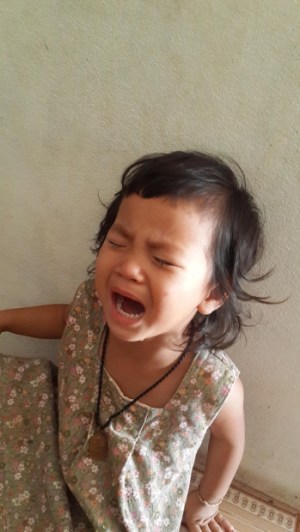
I don’t know for how long we have been saying this silly thing to kids. It’s been said since the good old days. But the truth is that some Colombian mother must have said it to her child, others heard it and spread it around the country and now it is said throughout the world to any baby or child that suffers a fall, gets a bump on the head and starts crying. It makes no sense whatsoever but mom or dad say it, it makes us laugh, they rub the affected area, and it restores our sense of well being.
In fact, I have to admit, I said this to myself one time, with my grandmother probably watching me from heaven and laughing alongside with me. Why not? The best cure for some unexpected moments is sometimes reacting with a good sense of humor that can elevate us from the situation we find ourselves in, calm down those hormones called cortisol and adrenaline, and avoid that “fight or flight” mode. Which can buy you some time while you reach out for proper medical help, as this little chant is not to take the place of that, of course.
Sana que Sana
Sana que Sana
Colita de Rana
Que si no sanas hoy
Sanarás mañana…
Español
No sé por cuánto tiempo se les ha estado diciendo este dicho a los niños. Pero lo cierto es que es desde los tiempos de la abuela. Alguna madre colombiana se le habrá ocurrido, otros lo oyeron y lo regaron por todo el país y se dice por todo el mundo cuando cualquier bebé o niño sufre alguna caída, le sale un chichón, y se pone a llorar. No tiene ningún sentido pero mamá o papá dice la rima, frota el área afectada, nos hacen reír lo cual nos trae tranquilidad y bienestar.
De hecho creo que alguna vez me lo he dicho a mi misma, riéndome, con mi abuela, que en paz descanse, quien diría desde el cielo. ¿Por qué no? La mejor cura para cualquier tropiezo aveces comienza en la manera en que reaccionamos, ya sea con sentido del humor que nos eleva de la situación que nos encontramos. Así se van tranquilizando un poco esas hormonas llamadas el cortisol y la adrenalina, para que no cunda el pánico, o el famoso “luchar o huir” mientras buscamos ayuda médica si es necesario. Ya que sana que sana, por supuesto, no puede reemplazar atención médica.
Subscríbase ahora y podrá recibir los avisos de nuevos artículos, canciones y recursos para enseñarles a sus hijos español. Las opiniones en esta página son simplemente una perspectiva de la Sra. Constancia. Compartiendo con otras madres y padres un deseo de ayudar en el desarollo de nuestros hijos y crear una comunidad que los ayude a progresar en sus estudios y expresiones culturales en español. Nuestro correo electrónico es TeachThemSpanish@gmail.com.
Subscribe now and receive notifications regarding new upcoming articles, songs and resources to assist you in your efforts to teach your kids Spanish.The opinions in this page are simply coming from the perspective of Prof. Constancia. I am sharing with other mothers and fathers with the intention of helping our children in their development, creating a community that will help all of them progress in their Spanish studies and cultural expression. Our email is TeachThemSpanish@gmail.com.
A vowel is a speech sound that is produced by an open configuration of the vocal tract. It includes vibrations of the vocal cords. But just like a sea which has no obstacles in its path, there is no friction or impediment to the airflow. A vowel is also a unit of the sound system of a language that forms the nucleus of a syllable. Without vowels we just simply cannot have words. There is no language wtihout the vowel. I think that without the vowel we would also be limited in our expression of emotions.
In the Spanish language… we are referring to a letter representing a vowel sound, such as a, e, i, o, u.
In Spanish our vowels are short and crisp and come in one sound only as opposed to the English language where you can have different “a” sounds, ate, cat, caught, bear, square…Crazy English!
Spanish is beautifully phonetic and uncomplicated in that way. Vowels in Spanish come in two ways:
“abiertas o fuertes” – a, e and o (requires your mouth to be more open and leaving the tongue on the bottom as you pronounce these sounds)
“cerradas o débiles” – i and u (your mouth will tend to close more, the tongue in the intermediate area without touching the palate)
“La Mar Estaba Serena” is a fun song for practicing the vowel sounds, much like the “I like to eat apples and bananas”song in English. Great to sing in the car on road trips, of course for trips to the beach, use it as a lullaby and watch the baby look at your lips with interest. Sing at a higher pitch, get dramatic and have fun with it! To learn a language we need to drop our self consciousness and be silly sometimes. If I can do it, so can you!
This was one of the songs we sang a lot in third grade. Images of the nearby sea came to mind in that island classroom and it was a sweet way of starting the day. So sing, sing high or sing low, and let your emotions flow out with the vowels in the song…
La mar estaba serena
La mar estaba serena
Serena estaba la mar
La mar estaba serena
Serena estaba la mar.
Practice with a:
La mar astaba sarana
sarana astaba la mar
la mar astaba sarana
sarana astaba la mar
Practice with e:
Le mer estebe serene
serene estebe le mer
Le mer estebe serene
serene estebe le mer
Practice with i:
Li mir istibi sirini
sirini istibi li mir
li mir istibi sirini
sirini istibi li mir
Practice with o:
Lo mor ostobo sorono
sorono ostobo lo mor
lo mor ostobo sorono
sorono ostobo lo mor
Practice with u:
Lu mur ustubu surunu
surunu ustubu lu mur
Lu mur ustubu surunu
surunu ustubu lu mur
(En Español)
¿Y qué tiene que ver el mar con las vocales?
Español
Una vocal es un sonido natural hablado que se pronuncia con el tracto vocal abierto. Incluye la vibración de las cuerdas vocales pero tal como el mar que no tiene impedimento alguno …no hay fricción ni impedimentos a la salida del aire. Una vocal también forma el nucleo de las sílabas, esto es cierto en todas las lenguas. Sin las vocales, simplemente, no tendríamos palabras. No existirían los lenguajes sin la vocal. Pienso que sin la vocal, estamos limitados en la expresión de las emociones también.
Nos referimos a la letra que representa los sonidos de las vocales en español: a, e, i, o, u.
En español nuestras vocales son cortas y contienen un solo sonido, lo que es diferente al inglés que tiene, por ejemplo, el sonido de la “a” puede ser largo o corto y todo de por medio como: ate, cat, caught, bear, square…¡Es un poco loco el idioma Inglés!
El español es una lengua fonética y menos complicada en ese sentido. Hay dos clases de vocales:
“abiertas o fuertes” – a, e and o (requiere la apertura de la boca y colocar la lengua en la parte inferior de la boca)
“cerradas o débiles” – i and u (requiere cerrar la boca un poco más y colocar la lengua en la parte intermedia sin tocar el paladar)
“La Mar Estaba Serena” es una canción divertida que ayuda practicar estos sonidos como en inglés “I like to eat apples and bananas”. Puede cantarse ya sea en los viajecitos por carro, a la playa, como canción de cuna y verás al bebé mirar tus labios de forma interesante. ¡Canta la canción en un tono mas alto y dramático y obtendrás otros efectos divertidísimos! Para aprender un idioma no puedes tener pena, pero jugar con el idioma. Si lo puedo hacer yo… ¡claro que lo puedes hacer tú!
Esta fue una de las canciones que cantábamos en el tercer grado. Nos imaginábamos el océano en esa aulita en la isla. Era también una bonita manera de empezar el día. Canta, en tonos altos o bajos… hay que dejar fluir las emociones con las vocales en esta canción…
Subscríbase ahora y podrá recibir los avisos de nuevos artículos, canciones y recursos para enseñarles a sus hijos español. Las opiniones en esta página son simplemente una perspectiva de la Sra. Constancia. Compartiendo con otras madres y padres un deseo de ayudar en el desarollo de nuestros hijos y crear una comunidad que los ayude a progresar en sus estudios y expresiones culturales en español. Nuestro correo electrónico es TeachThemSpanish@gmail.com.
Subscribe now and receive notifications regarding new upcoming articles, songs and resources to assist you in your efforts to teach your kids Spanish.The opinions in this page are simply coming from the perspective of Prof. Constancia. I am sharing with other mothers and fathers with the intention of helping our children in their development, creating a community that will help all of them progress in their Spanish studies and cultural expression. Our email is TeachThemSpanish@gmail.com.
“El Profesor Hippie”.. with Argentinian comedian actor Luis Andrini. On this Teacher Appreciation week, this show comes to mind. Watching Spanish Who remembers this favorite professor from the past…He was probably like the Welcome Back Kotter counterpart…if you look over the small differences like language and dress code. These were reruns for years..Enjoy! Share with us your favorite teacher memory… or your favorite program…
Quién se acuerda del “Profesor Hippie?” En esta semana de celebraciones del maestro un recuerdo del pasado…El es parecido al profesor de “Welcome Back Kotter” de Nueva York…con pequeñas diferencias como el idioma y el vestuario. Como nos encantaba ver estos episodios una y otra vez…¡Disfrüten! Compartan con nosotros su profesor favorito… o sus programas favoritos…
Subscríbase ahora y podrá recibir los avisos de nuevos artículos, canciones y recursos para enseñarles a sus hijos español. Las opiniones en esta página son simplemente una perspectiva de la Sra. Constancia. Compartiendo con otras madres y padres un deseo de ayudar en el desarollo de nuestros hijos y crear una comunidad que los ayude a progresar en sus estudios y expresiones culturales en español.
Subscribe now and receive notifications regarding new upcoming articles, songs and resources to assist you in your efforts to teach your kids Spanish.The opinions in this page are simply coming from the perspective of Prof. Constancia. I am sharing with other mothers and fathers with the intention of helping our children in their development, creating a community that will help all of them progress in their Spanish studies and cultural expression. .
One of the joys of being a child is playing those chasing games… maybe it’s a “big bad wolf” or the “witch” … or any number of other games that parents and grandparents come up with to run after them. Then at the end come the hugs and kisses or tickles. Here is one such game…”Juguemos en el bosque.”
Una de las delicias de ser un niño es jugar a juegos donde te persiguen ya sea “la bruja” o “el lobo hambriento” o cualquier cantidad de juegos que se inventan los padres y abuelos… para correr detrás de los pequeñitos… y despues abrazar y dar besos o cosquillas.
He aquí un jueguito que se puede jugar con los niños…
Juguemos en el bosque
Juguemos en el bosque, mientras el lobo no está…
Juguemos en el bosque, mientras el lobo no está…
¿Lobo dónde estás?
El lobo: Oigo unos pequeños… me acaban de despertar...
Juguemos en el bosque, mientras el lobo no está…
Juguemos en el bosque, mientras el lobo no está…
¿Lobo dónde estás?
El lobo: Me estoy levantando de la cama…
Juguemos en el bosque, mientras el lobo no está…
Juguemos en el bosque, mientras el lobo no está…
¿Lobo dónde estás?
El lobo: Ya me estoy poniendo los zapatos…
Juguemos en el bosque, mientras el lobo no está…
Juguemos en el bosque, mientras el lobo no está…
¿Lobo dónde estás?
El lobo: Tranquilos, tranquilos que me estoy cepillando los dientes…
Juguemos en el bosque, mientras el lobo no está…
Juguemos en el bosque, mientras el lobo no está…
¿Lobo dónde estás?
EL lobo: Me estoy poniendo el sombrero…
Juguemos en el bosque, mientras el lobo no está…
Juguemos en el bosque, mientras el lobo no está…
¿Lobo dónde estás?
El lobo: AHORA TENGO QUE ABRIR LA PUERTA…
Juguemos en el bosque, mientras el lobo no está…
Juguemos en el bosque, mientras el lobo no está…
¿Lobo dónde estás?
El lobo: ¡¡¡ME ESTA DANDO MUCHA HAMBRE!!
Juguemos en el bosque, mientras el lobo no está…
Juguemos en el bosque, mientras el lobo no está…
¿Lobo dónde estás?
El lobo: ¡¡¡AHAAAA…YA LOS VEO Y ME LOS VOY A COMER TODOS ENTERITOS!!!
Subscríbase ahora y podrá recibir los avisos de nuevos artículos, canciones y recursos para enseñarles a sus hijos español. Las opiniones en esta página son simplemente una perspectiva de la Sra. Constancia. Compartiendo con otras madres y padres un deseo de ayudar en el desarollo de nuestros hijos y crear una comunidad que los ayude a progresar en sus estudios y expresiones culturales en español. Eso es todo. Colorín Colorado… este cuento se ha terminado.
Subscribe now and receive notifications regarding new upcoming articles, songs and resources to assist you in your efforts to teach your kids Spanish.The opinions in this page are simply coming from the perspective of Prof. Constancia. I am sharing with other mothers and fathers with the intention of helping our children in their development, creating a community that will help all of them progress in their Spanish studies and cultural expression. That’s it. This tale is all told out.




 teachthemspanish.com